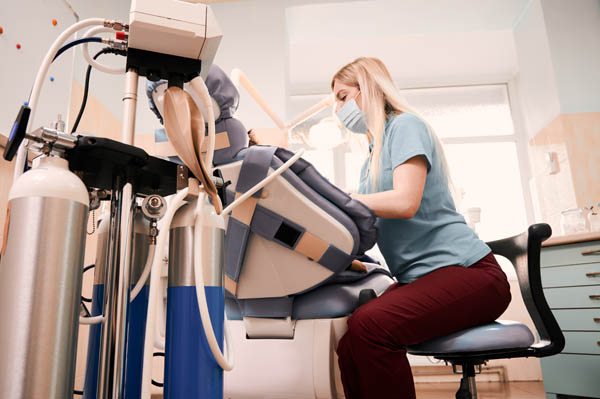
Sedation dentistry helps individuals to overcome the fear of dentists. Dental anxiety affects many people and it often prevents them from getting treatments they need when problems develop in their mouths. However, most dental problems do not go away on their own. Treatment is needed to prevent the issue from getting worse, which can result in a lot of pain, money and time. Thankfully, sedation dentistry is a good solution. Individuals that do fear the dentist can undergo their procedure in a sedation dentistry setting to help offset these feelings, thus allowing for the appropriate oral health care.
How sedation dentistry helps with dental anxiety
The sedatives used in sedation dentistry help patients to feel relaxed and less anxious. The goal is to make the patient's experience as comfortable as possible so they no longer see going to the dentist as a scary thing that should be avoided.
People who do not have dental anxiety can also benefit from sedation dentistry if they struggle with back/neck pain during treatments or if they need to have excessive dental work done. Dental sedatives can reduce the number of trips a patient needs to make to the dentist since they can sit comfortably in a dentist's chair for longer. Dental sedatives can be used for most treatments ranging from the least invasive procedures like teeth whitening to surgical treatments like the installation of dental implants. Dental sedatives are commonly used to address issues like:
- Sore jaw muscles
- Dental phobias
- Low pain tolerance
- Overactive gag reflexes
- Patients who are unresponsive to local anesthetics
- Traumatic past experiences with a dentist
- Inability to stay still for prolonged periods
Oral sedation used in dentistry
Before recommending oral sedation, the dentist evaluates the patient to determine whether it is appropriate for their needs. This evaluation may include reviewing the patient's medical history, current medications, planned dental treatment, and level of anxiety. During a consultation, patients should also share any health conditions or concerns that could affect how they respond to sedative medication.
When appropriate, the dentist may prescribe an oral sedative for the patient to take before the appointment. The medication can help reduce anxiety and make it easier to remain relaxed during dental treatment. Patients generally remain conscious and able to respond to the dental team, although they may feel drowsy and remember less about the appointment afterward.
Additionally, because oral sedatives can affect coordination, alertness, and judgment, patients need to arrange transportation to and from the dental office. The dentist will provide instructions about when to take the medication, eating and drinking before the visit, and any activities to avoid afterward. Patients should follow those directions carefully and plan to rest while the effects of the medication wear off.
Give dental sedatives a try
Sedation dentistry can make dental appointments and procedures easier. Call or visit our St Petersburg clinic to set up an appointment with our dentist.
Request an appointment here: https://www.baydentalfl.com or call Bay Dental Associates: Aaron Moneyhan DMD, PA at (727) 823-2007 for an appointment in our St Petersburg office.
Check out what others are saying about our dental services on Yelp: Sedation Dentist in St Petersburg, FL.
Recent Posts
There are risks associated with sedation dentistry, although most patients do not have any adverse effects. However, learning about the potential drawbacks to sedation dentistry, as well as the benefits, can help you decide if sedation dentistry is appropriate and safe for you to utilize. The most notable risks of sedation dentistry include an allergic reaction,…
Visiting a new dental office for the first time can feel exciting and a little uncertain. Knowing what to expect can help make the experience smooth and stress-free. A first visit is a great opportunity to meet the dental team, discuss concerns, and help patients feel confident about their dental care.The front desk team usually…
A root canal is an endodontic procedure that can help save a tooth when infection or damage reaches the soft tissue inside. However, dental pain, swelling, sensitivity, or visible damage can make it difficult for patients to know whether it will help or if it is even necessary. During a simple evaluation, our dentist can…
A dental filling is a common restorative treatment that protects a tooth from further decay. While recovering after the procedure is straightforward, one of the first questions patients ask is when they can safely resume eating. It is important to protect your smile and ensure the restoration cures without causing accidental injury. Understanding the timeline…